Best overall starting point: Daikin. Best for a restricted-roof-space shortlist: Mitsubishi Electric. Best for a replacement-system comparison: Fujitsu General. Best for model-specific air-treatment options: Panasonic. For a Sunshine Coast home in 2026, ask Tenmen Electrical to assess the house before you commit to a brand.
- The best ducted air conditioner brands shortlist includes Daikin, Mitsubishi Electric, Fujitsu General and Panasonic.
- Choose a ducted air conditioning system by room loads, roof access and zoning, not brand reputation alone.
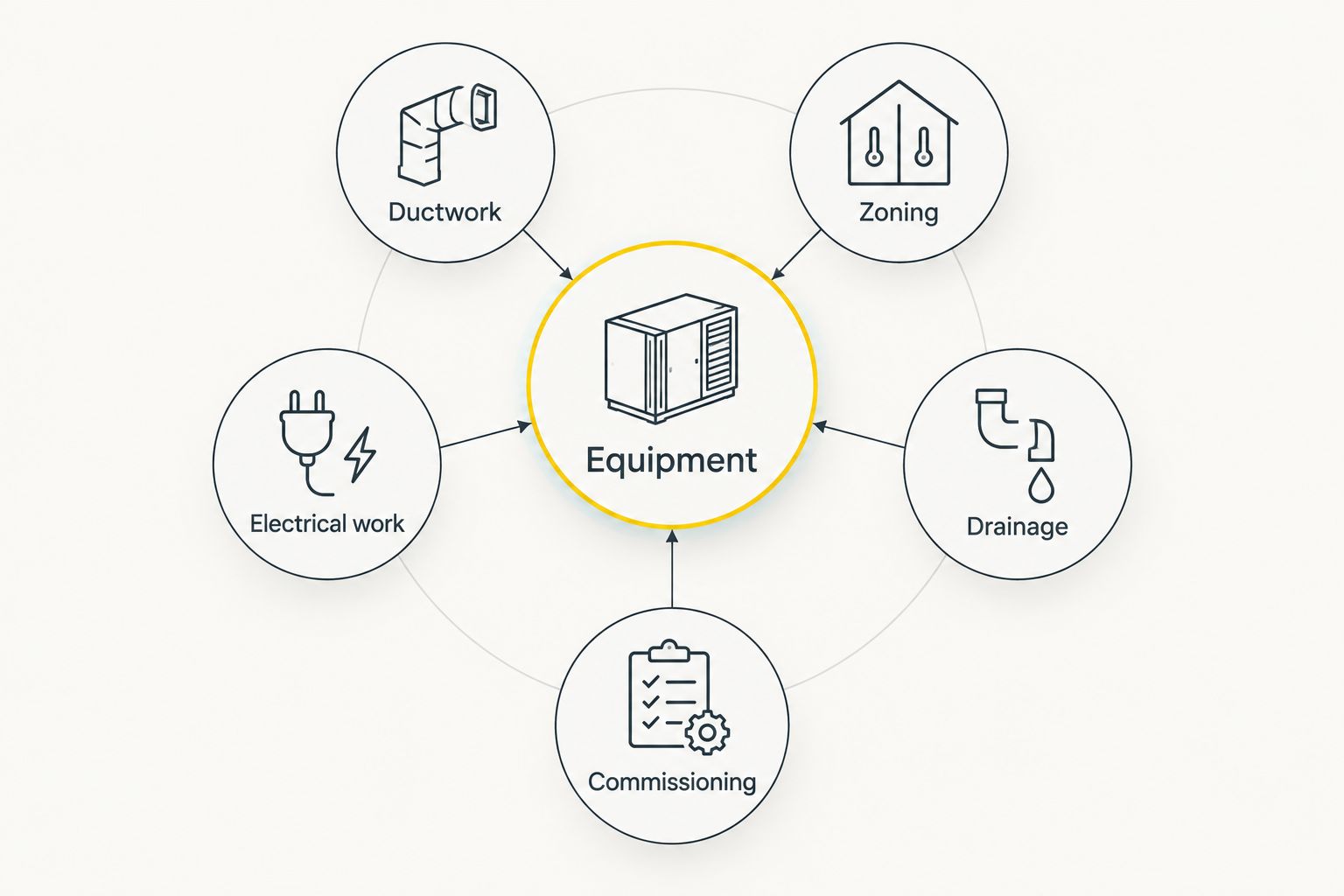
- Compare complete installation quotes: equipment, ducts, controls, electrical work, drainage and commissioning.
- Tenmen Electrical serves Sunshine Coast homeowners seeking air conditioning installation and repair.
Why this matters
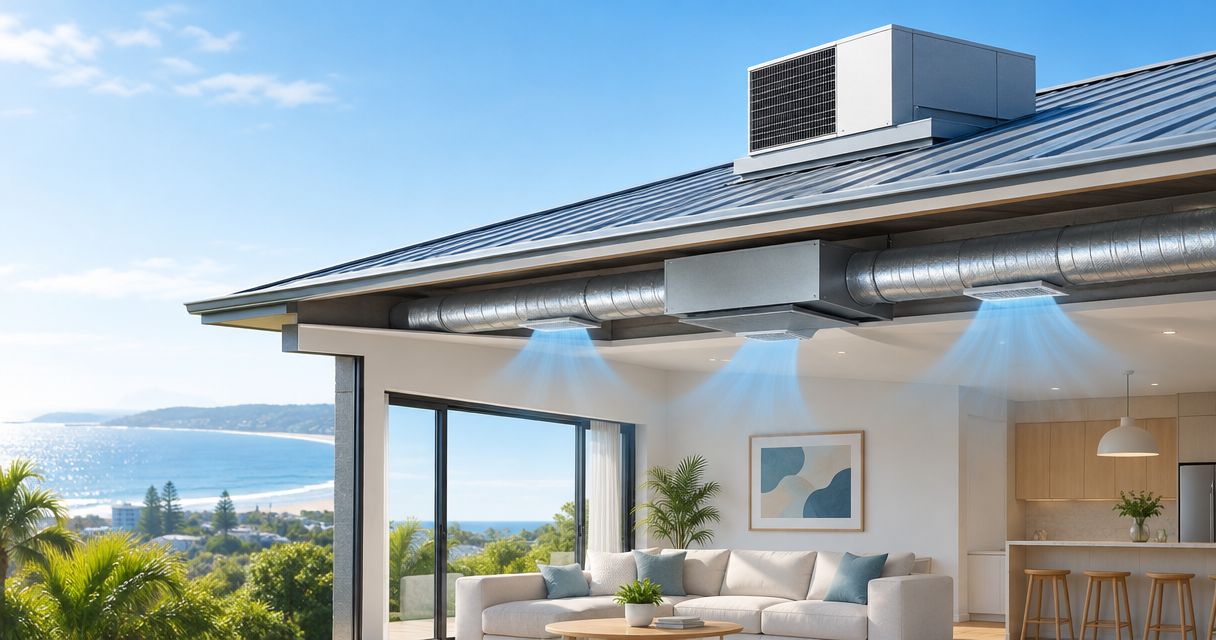
A ducted air conditioner supplies conditioned air through ducts to outlets around your home. The indoor unit usually sits out of sight, so installation details deserve as much attention as the outdoor unit's badge.
For a Caloundra homeowner comparing systems in 2026, the useful question is not simply which brand is best. It is which proposed system suits the rooms, roof space and way the household uses the house. A brand shortlist helps you request quotes; a house assessment determines what belongs in the quote.
What makes the best ducted air conditioner brands?
Use these criteria before comparing names:
- Room loads: The design accounts for room size, glazing, insulation, orientation and occupancy, rather than floor area alone.
- Roof fit: The indoor unit, ducts and service access fit the available space without an impractical layout.
- Zoning: The controls let you condition the areas you use, while respecting the system's airflow requirements.
- Noise planning: The design considers indoor airflow, bedroom outlets and outdoor-unit placement.
- Complete scope: The quote identifies equipment, ductwork, electrical work, drainage, controls and commissioning.
- Service access: Filters, drains and equipment remain accessible for maintenance and repair.
These are buying criteria, not claims that one manufacturer wins every category. Exact model selection matters: two systems from the same brand need not offer the same controls, dimensions or features.
Ducted air conditioner brands at a glance
The order below is a practical quote shortlist, not a laboratory performance ranking. Each brand has a different comparison role; none replaces a site assessment.
| Brand | Best for | What to examine | Key limitation |
|---|---|---|---|
| Daikin | A whole-home starting shortlist | Proposed capacity, zoning and complete installation design | The badge does not establish whether the selected system suits your house |
| Mitsubishi Electric | Restricted roof-space discussions | Indoor-unit dimensions, access and duct routing | A compact unit still needs room for ducts, drainage and servicing |
| Fujitsu General | Comparing a ducted replacement proposal | New equipment requirements and the condition of existing ducts | Existing infrastructure must be assessed rather than automatically reused |
| Panasonic | Buyers considering air-treatment features | Whether the exact ducted model includes the desired feature | Features differ by model and do not replace ventilation or maintenance |
1. Daikin: best ducted shortlist for a whole-home installation
Daikin makes ducted air conditioning systems and is a useful starting point when you want a whole-home proposal. Ask for an exact model and a room-by-room design, not a quote that names only the manufacturer.
For a new installation, compare the proposed outlet positions, return-air location and zone arrangement. Those decisions explain how the system will serve your home; the brand name alone does not.
Daikin pros:
- Gives you an established ducted-system option to include in a quote comparison.
- Lets you assess a complete whole-home proposal against the criteria above.
- Provides a clear baseline when another installer proposes a different manufacturer.
Daikin cons:
- A recommendation without model numbers leaves important details unresolved.
- A recognised name does not correct unsuitable sizing or poorly planned ducts.
- Controls and optional features need confirmation for the selected equipment.
Best for: Homeowners starting a whole-home ducted air conditioning shortlist without a preferred manufacturer.
Ask the installer to explain why the proposed capacity suits your rooms and which zones can operate together. If the answer focuses only on the badge, the proposal needs more detail.
Verdict: Hold the purchase until the Daikin model, zoning and installation scope are documented.
2. Mitsubishi Electric: best shortlist for restricted roof space
Mitsubishi Electric offers ducted systems, including low-profile indoor-unit designs. That makes the brand relevant when your first question is whether ducted equipment can fit above the ceiling.
A low-profile indoor unit addresses only part of the problem. Your installer still needs to allow for duct connections, drainage, return air and access to service the equipment.
Mitsubishi Electric pros:
- Offers low-profile ducted designs worth assessing for constrained installations.
- Gives you a specific reason to discuss equipment dimensions early.
- Supports a quote comparison centred on physical fit rather than appearance.
Mitsubishi Electric cons:
- Low profile does not mean every roof cavity is suitable.
- Difficult access and duct routing remain installation issues.
- A smaller equipment envelope does not establish the right cooling capacity.
Best for: Homeowners whose roof space or access is the main obstacle to a ducted installation.
Request the proposed indoor-unit dimensions and ask how the equipment will be installed and maintained. Do not accept an answer based only on whether the unit can pass through the access opening.
Verdict: Hold until Mitsubishi Electric equipment and its service clearances fit the assessed space.
3. Fujitsu General: best shortlist for a replacement comparison
Fujitsu General makes ducted reverse-cycle systems, which provide both cooling and heating. Include the brand when comparing a replacement proposal with your existing system's arrangement.
This is a useful comparison role, not a claim that Fujitsu General equipment connects to every existing installation. The installer must assess whether ducts, outlets, controls, drainage and electrical infrastructure suit the replacement.
Fujitsu General pros:
- Provides another ducted reverse-cycle option for a replacement shortlist.
- Encourages an equipment comparison beyond simply repeating the existing brand.
- Lets you review the old layout alongside a proposed new system.
Fujitsu General cons:
- Existing ducts are not automatically suitable for new equipment.
- Old controllers and other components require compatibility checks.
- Replacing the unit alone does not address damaged ducts or an unsuitable layout.
Best for: Homeowners replacing ageing ducted equipment who want the existing installation assessed properly.
Ask the installer to separate retained components from new work in the quote. If existing ducts remain, request a clear explanation of their condition and suitability for the proposed system.
Verdict: Hold until the Fujitsu General proposal identifies exactly what stays and what changes.
4. Panasonic: best shortlist for model-specific air treatment
Panasonic offers ducted air conditioning models with nanoe X air-treatment technology. If air treatment is part of your buying brief, ask whether the exact model quoted includes it and what the manufacturer's documentation says it does.
Treat this as a feature to investigate, not a reason to overlook sizing, airflow or installation quality. Air-treatment features do not remove the need to clean filters, maintain equipment or address dampness at its source.
Panasonic pros:
- Offers a model-specific air-treatment feature to investigate.
- Gives households a defined feature to compare with their actual priorities.
- Keeps the discussion focused on documented equipment rather than general brand claims.
Panasonic cons:
- Do not assume every Panasonic ducted model has the same features.
- An air-treatment feature does not replace ventilation or moisture management.
- Additional features do not establish whether the proposed capacity is suitable.
Best for: Homeowners who want to examine air-treatment functionality alongside the core ducted design.
Ask for documentation for the exact proposed model. Avoid treating broad claims about clean air as a substitute for a clear explanation of the feature's scope and limitations.
Verdict: Hold until the Panasonic model's features match the written proposal and your priorities.
How this shortlist is ranked
Daikin leads as the general starting point; Mitsubishi Electric addresses the roof-space discussion; Fujitsu General provides a replacement comparison; Panasonic adds a model-specific air-treatment question.
The order does not claim measured differences in reliability, running costs or noise. For your 2026 installation, the strongest proposal is the one that answers the design criteria with specific equipment and a complete scope.
What should your ducted installation quote include?
Tenmen Electrical is a family-owned electrical and air conditioning installation and repair business serving residential and commercial customers across the Sunshine Coast. For a residential ducted quote, prepare a room list and explain when you use each area.
Ask for these inclusions in writing:
- Equipment: Indoor and outdoor model numbers, rated capacities and controller details.
- Ductwork: New or retained ducts, insulation, outlet locations and return-air arrangement.
- Zoning: Zone boundaries, controls and operating restrictions.
- Electrical work: Circuit requirements and any necessary switchboard work.
- Drainage: Condensate disposal arrangements and access for maintenance.
- Commissioning: Final checks and an explanation of system operation.
A quote's scope explains its differences better than the brand name. Roof access, duct routes, outlet positions, electrical requirements and the amount of existing infrastructure retained all affect the work involved.
Ask who handles each part of the work and which items are excluded. For a 2026 replacement, also confirm removal of old equipment and whether any ceiling repairs sit outside the installation scope.
Request a ducted air conditioning quote
Discuss your Sunshine Coast home's rooms, roof access and installation requirements.
Read capacity and energy figures correctly
Cooling capacity and electrical input describe different things. A cooling-capacity figure tells you about heat removal; electrical input describes the power the equipment draws under stated conditions.
For units, 1 kilowatt equals 1,000 watts. Energy use is measured differently: a steady electrical draw of 1 kilowatt for 1 hour uses 1 kilowatt-hour of electricity. Do not read a cooling-capacity figure as an identical electricity-use figure.
When comparing equipment in 2026, ask for the relevant manufacturer documentation and the assumptions behind any running-cost estimate. Your operating hours, settings, weather and electricity tariff belong in that calculation. A brand-wide savings promise does not answer those questions.
Which ducted air conditioner brand should you choose?
Start with Daikin if you have no preferred brand, then compare the proposal against your home's main constraint. Add Mitsubishi Electric when roof fit is central, Fujitsu General when replacing existing ducted equipment, or Panasonic when documented air-treatment functionality matters to you.
Tenmen Electrical is a local option for Sunshine Coast homeowners seeking ducted air conditioning installation advice. Request a quote that explains the proposed equipment and installation work, rather than choosing from brand names alone.
FAQ
What's the best ducted air conditioner brand for a Sunshine Coast home?
There is no single best brand for every Sunshine Coast home. Start with Daikin, Mitsubishi Electric, Fujitsu General and Panasonic, then compare the exact models, roof fit, zoning and installation scope.
Is Daikin better than Mitsubishi Electric for ducted air conditioning?
Choose between specific Daikin and Mitsubishi Electric proposals, not their names alone. Compare capacity, dimensions, controls, installation design and documented features for your home.
Can I reuse my existing ducts with a new air conditioner?
Existing ducts need an assessment before reuse. Their condition, insulation, layout and suitability for the new equipment determine whether retaining them makes sense.
Can every room have its own ducted air conditioning zone?
Room-by-room zoning depends on the proposed system and duct design. Ask which zones can operate independently and what airflow restrictions apply.
What affects the cost of ducted air conditioning installation?
Equipment selection, roof access, duct routes, zoning, electrical work and drainage affect the installation scope. Compare itemised quotes that identify inclusions, exclusions and retained components.
Does a larger ducted air conditioner always work better?
No, larger capacity is not automatically a better match. The installer should assess the home's heating and cooling requirements before recommending equipment.
Does Panasonic air treatment replace filter cleaning?
No, air-treatment features do not replace filter cleaning or equipment maintenance. Confirm which features the exact quoted model includes and follow its maintenance instructions.
Who can I ask about ducted air conditioning in Caloundra?
Tenmen Electrical serves homeowners across the Sunshine Coast, including the Caloundra area. Request an assessment covering your rooms, roof access, zoning preferences and electrical requirements.
One last thing
Ask the installer to show you where the filter will be accessed before approving the layout. A system hidden above the ceiling still needs regular attention, and inconvenient access becomes your problem after installation.
Put that access arrangement in the written scope. It is a practical detail that a brand comparison cannot settle.