Your safety switch keeps tripping because it is detecting electricity leaking away from its intended path, often through a faulty appliance, damaged wiring or moisture. Repeated trips need investigation, not repeated resets; the switch alone cannot tell you where the fault is. If you notice smoke, sparks, a burning smell, heat or water around electrical equipment, keep clear and get urgent help.
- Searching ‘electrician sunshine coast safety switch tripping’? Repeated trips need fault testing, not repeated resets.
- Tenmen Electrical suits Sunshine Coast homeowners seeking residential electrical repairs.
- A safety switch detects electrical leakage; a circuit breaker generally protects against overloads and short circuits.
- Leave suspect appliances unplugged and never open a switchboard or remove electrical covers.
Why this matters
A tripped switch interrupts dinner, cooling or the fridge, but restoring power is not the only concern. The priority is finding out whether the circuit is safe to use. An appliance that still runs can have an electrical fault.
For Caloundra and Sunshine Coast homeowners, Tenmen Electrical provides residential electrical installation and repair services. When you request help, describe what happened immediately before the trip rather than assuming the switch itself needs replacing.
This 2026 guide separates safe observations from electrical work that belongs with a licensed electrician. You do not need to open anything or reproduce the fault to give useful information.
Why does your safety switch keep tripping?
A safety switch, also called a residual current device or RCD, compares current flowing out through a circuit with current returning. An imbalance indicates that some electricity is taking another path. The device disconnects the supply when that imbalance reaches its operating threshold.
Common household safety switches have a rated residual current of 30 milliamps or less. That rating concerns leakage, not how many appliances you can plug in. It does not mean you should test a suspected fault yourself.
The pattern gives an electrician a starting point, but a pattern is not a diagnosis.
| What you notice | What needs checking | What you should do |
|---|---|---|
| The switch trips when an appliance starts | The appliance, its lead and the connected circuit | Stop using the appliance; unplug it only if safe |
| Trips follow rain or water exposure | Moisture affecting equipment, outlets or wiring | Keep clear of wet electrical equipment |
| The switch trips with portable appliances unplugged | Fixed equipment, wiring or the protective device | Leave the affected circuit off and arrange testing |
| Trips happen intermittently | Operating cycles, intermittent faults or combined leakage | Record the circumstances without recreating them |
| Several rooms lose power together | Which circuits the safety switch protects | Tell the electrician which areas lost power |
These observations help narrow the investigation. They do not prove that an appliance, cable or switch needs replacement.
Is it the safety switch or the circuit breaker?
A safety switch and a circuit breaker respond to different problems. A circuit breaker generally protects wiring against excessive current, including overloads and short circuits; a safety switch responds to leakage. Some devices combine both functions in one unit, called an RCBO.
You can look at visible labels and whether the device has a test button without removing a cover. If you cannot identify it confidently, describe the device to the electrician or provide a photograph taken from a safe position.
| Protective device | Main purpose | Useful distinction | Limitation |
|---|---|---|---|
| Safety switch, or RCD | Detect electrical leakage | Usually has a test button | Does not identify the faulty appliance or wiring |
| Circuit breaker | Protect wiring against excessive current | Often has a circuit label | Does not provide the same protection as an RCD |
| Combined device, or RCBO | Provide both types of protection | Combines leakage and overcurrent protection | Testing is still needed to establish why it tripped |
Neither device is a substitute for safe wiring and equipment. In 2026, the practical advice remains simple: tell the electrician exactly which device operated, rather than calling every outage an overload.
Faulty appliances: what to look for
A damaged lead, internal insulation fault or moisture inside an appliance can cause leakage. A trip associated with a kettle, washing machine or another appliance is useful evidence, but timing alone does not establish the cause.
Leave a suspect appliance unplugged until it has been assessed. Do not move it to another socket to see whether it trips a different circuit. That simply exposes another part of the home to the same suspected fault.
Look only for things you can observe safely: a damaged cord, a discoloured plug or water nearby. Do not touch equipment that is wet, unusually hot, sparking or visibly damaged, and never remove its cover.
An appliance can also operate for part of its cycle before a fault appears. Tell the electrician whether the trip happened immediately, during heating or later in the cycle; do not run it again to confirm the timing.
Moisture and fixed wiring: when unplugging is not enough
Rain-related trips deserve attention, particularly where outdoor electrical equipment is involved. Water can affect an outlet, fitting, cable connection or appliance. A trip after rain is a reason to investigate moisture entry, not proof that the safety switch is faulty.
Fixed equipment also remains connected when you unplug portable appliances. Lighting, an air conditioner or another permanently connected load can still be relevant to the fault.
If the safety switch will not stay on, leave it off. Do not open an outdoor outlet, remove a light fitting or try to dry electrical parts yourself. Keep people away from the affected area and arrange licensed electrical testing.
For a Sunshine Coast home with air conditioning, describe whether the trip coincided with the system starting or operating. An air-conditioning fault and a wiring fault require different repairs, so avoid booking a replacement appliance before the cause is established.
Why the cause and repair scope vary
The same visible symptom can come from different faults. These factors affect what the electrician needs to check and what a repair quote needs to cover:
- Connected equipment: A portable appliance can be unplugged; permanently connected equipment requires professional isolation and testing.
- Moisture exposure: Water entry requires attention to both the electrical fault and the source of moisture.
- Fault timing: An intermittent trip is different from a fault that is present continuously.
- Circuit arrangement: One protective device can supply more than one area, so the affected rooms do not necessarily identify the fault location.
- Combined leakage: Leakage from several connected appliances can contribute to a trip without one obvious damaged item.
- Existing condition: Damaged wiring or defective protection changes the repair scope compared with a single faulty appliance.
A new safety switch does not repair faulty wiring or an unsafe appliance. Ask for the fault to be identified before agreeing to replacement as the solution.
What can you safely check before calling?
Keep the checks external and stop whenever something looks unsafe. You are collecting information, not carrying out an electrical test.
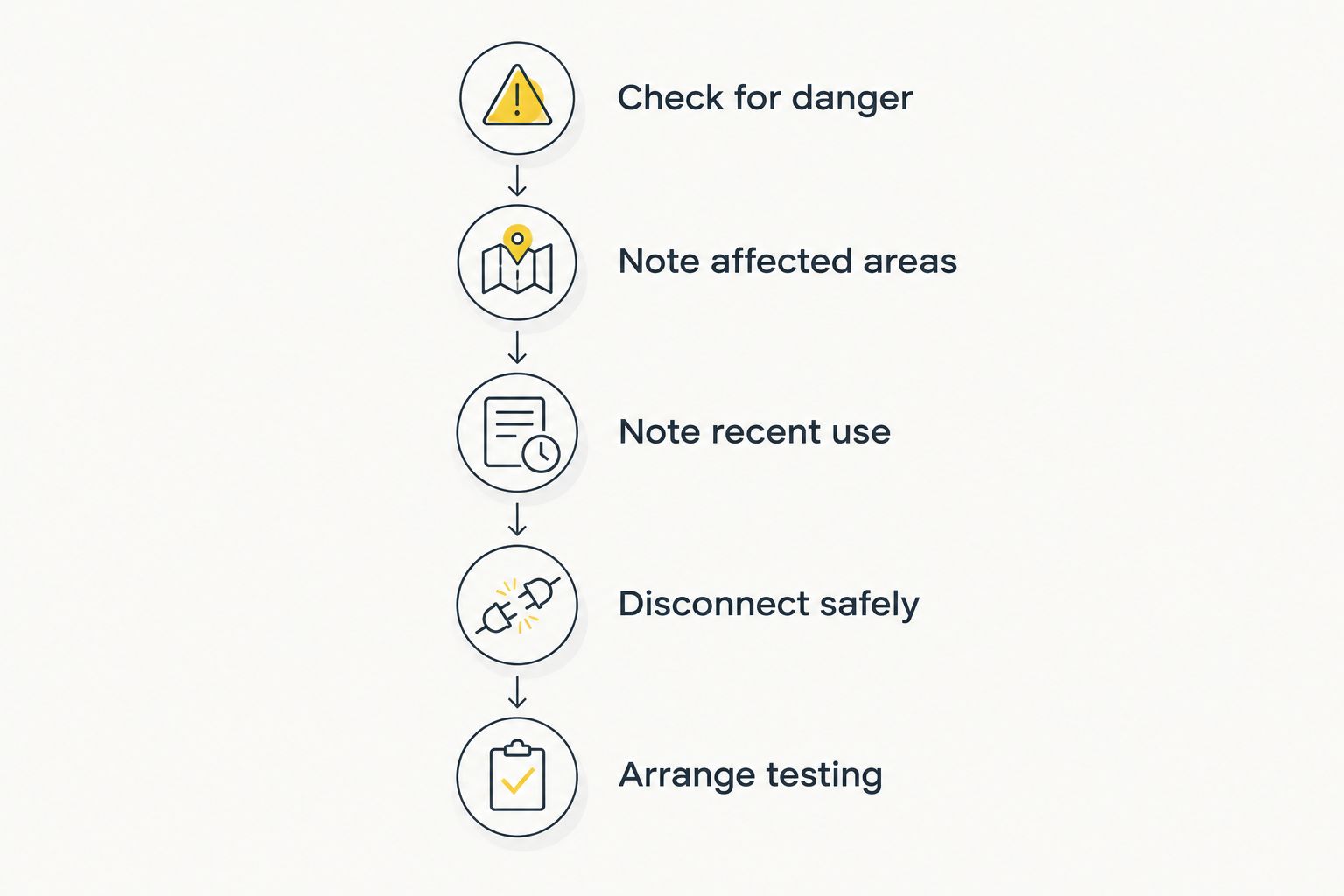
- Check for danger. Keep clear if you see smoke, sparks, heat damage or water near electrical equipment. For fire or immediate danger, call Triple Zero, 000.
- Note affected areas. Record which lights, sockets or appliances stopped working. Do not remove covers to trace circuits.
- Note recent use. Write down what switched on just before the trip and whether rain, cleaning or a spill preceded it.
- Disconnect safely. Unplug a suspect portable appliance only when its plug and surroundings are dry, intact and safe to touch.
- Arrange testing. If the switch trips repeatedly, will not stay on or has already tripped again after a reset, leave the affected circuit off and call a licensed electrician.
There is no need to keep resetting the switch to gather more evidence. A short account of what happened is more useful than repeatedly restoring power to a suspected fault.
If someone has received an electric shock, seek medical advice promptly. Do not touch a person who remains in contact with an electrical source; call emergency services and follow their instructions.
What should a fault-finding quote include?
For a 2026 repair enquiry, explain the symptom before requesting a fixed repair figure. The electrician needs to distinguish the investigation from any work required after the fault is found.
Ask whether the quote or booking terms explain:
- The scope of the initial fault-finding visit.
- Any attendance, diagnostic or after-hours charges.
- How additional repair work will be approved.
- Whether replacement parts are included or quoted separately.
- What testing and documentation apply to the completed work.
- What happens if access or another trade is needed.
A clear quote separates finding the fault from fixing it. That distinction helps you compare the same scope rather than choosing between figures that cover different work.
When you contact Tenmen Electrical about safety switch tripping, mention whether the problem affects the whole home or one area, whether it follows rain, and whether a particular appliance was operating. Share photographs only when you can take them safely, without opening the switchboard.
Request help with repeated trips
Describe the affected areas, recent appliance use and any signs of moisture when requesting a quote.
Can I keep resetting a safety switch that trips?
Repeated trips mean you should stop resetting the safety switch. Restoring power does not establish that the underlying fault has disappeared, even if the switch stays on temporarily.
Do not hold a switch in position, bypass protection or use an extension lead to keep a suspect appliance running elsewhere. Leave the affected circuit off and arrange an electrician.
Does a tripping safety switch mean I need rewiring?
A tripping safety switch does not, by itself, establish that your home needs rewiring. The cause can be an appliance, moisture, fixed equipment, wiring or the protective device.
For a 2026 repair decision, ask what testing supports the proposed work and which part of the installation is affected. Approve a repair based on an identified fault, not the symptom alone.
FAQ
Why does my safety switch trip when nothing is plugged in?
Fixed wiring or permanently connected equipment can still cause a trip when portable appliances are unplugged. Leave the affected circuit off and arrange electrical testing rather than assuming the safety switch needs replacing.
Why does my safety switch trip after rain?
Moisture affecting electrical equipment or wiring can cause leakage and trip a safety switch. Keep clear of wet outlets and equipment, and ask an electrician to investigate rather than trying to dry electrical parts yourself.
Can too many appliances trip a safety switch?
Combined leakage from connected appliances can trip a safety switch, while excessive load generally operates overcurrent protection. A combined protective device can respond to either problem, so the cause needs to be identified.
Is it safe to use an appliance after it trips the safety switch?
Do not keep using an appliance suspected of causing a safety-switch trip. Leave it unplugged until it has been assessed, and do not try it on another circuit.
Should I replace my safety switch if it keeps tripping?
Repeated tripping alone is not a reason to replace a safety switch. An electrician needs to establish whether the device is operating correctly in response to an appliance or wiring fault.
What should I tell an electrician about safety switch tripping?
Tell the electrician which areas lost power, what was operating and whether water or rain was involved. Mention burning smells, heat, sparks or any electric shock immediately, without recreating the fault.
What should a safety-switch repair quote cover in 2026?
A 2026 safety-switch repair quote should distinguish fault finding from repairs and explain how additional work is approved. Ask about attendance charges, parts, testing and any relevant documentation before authorising work.
One last thing
The room that loses power is not necessarily where the fault started. A safety switch can protect multiple circuits, and a circuit can serve outlets in different rooms.
For your 2026 repair enquiry, write down what stopped working rather than guessing where the fault sits. That gives the electrician useful information while keeping you away from live equipment.