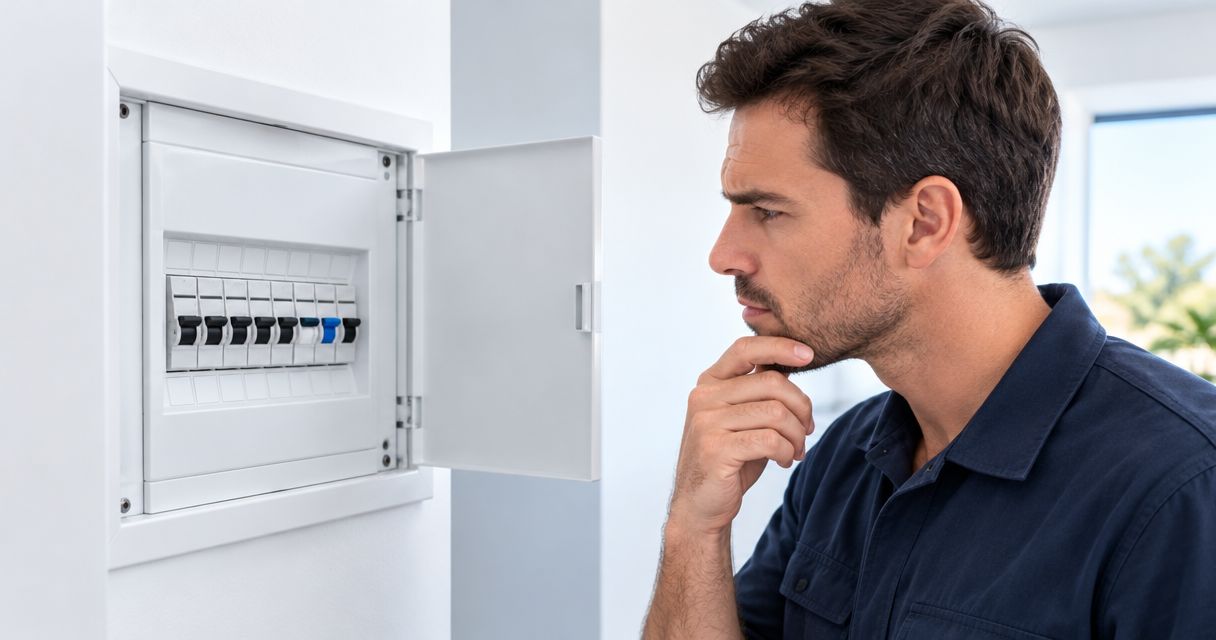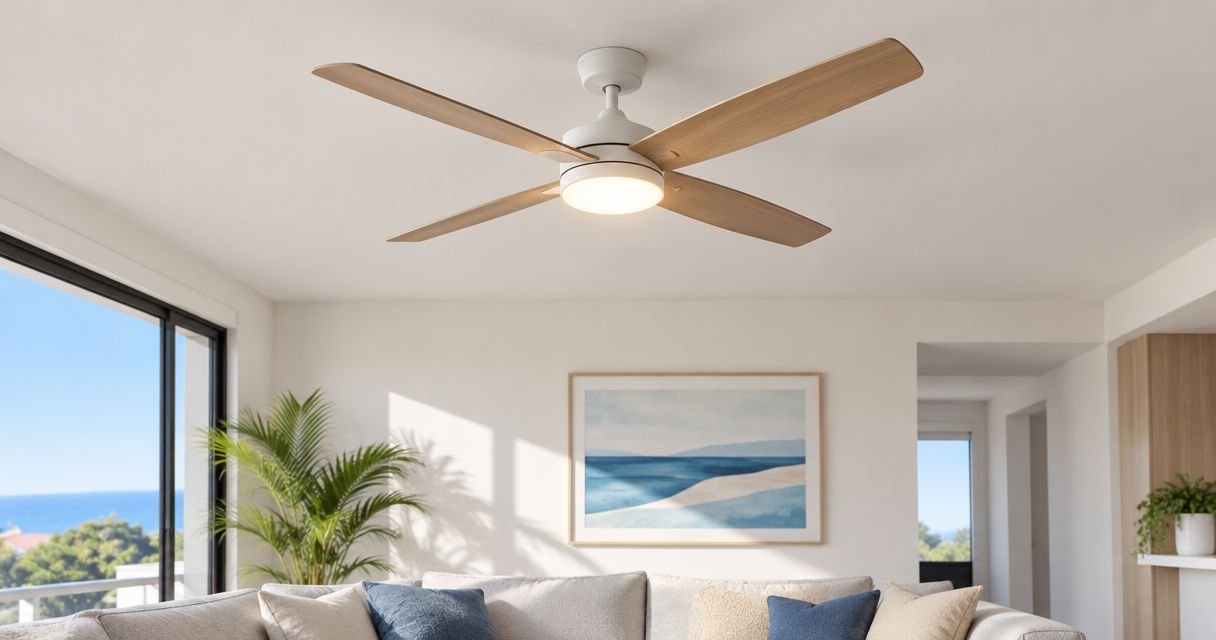
Yes—a ceiling fan can replace an existing light fitting if the ceiling structure, electrical wiring and blade clearances suit the chosen fan. The light fitting’s mounting point alone does not establish that it can support a fan, and keeping a light in the same position requires a fan with a light or a separate lighting arrangement. In Queensland, a licensed electrician must carry out this electrical installation work.
- An existing light point is a possible fan location, not proof of suitable support or wiring.
- For electrician sunshine coast ceiling fan installation, check mounting, blade clearance, controls and lighting before choosing a fan.
- Tenmen Electrical is a fit for Sunshine Coast homeowners seeking professional ceiling fan installation.
- Compare installation scope, not just the fan: structural support, electrical alterations and ceiling repairs affect the work.
Can a ceiling fan go where your light fitting is?
Yes, but the electrician needs to assess the location before confirming a straightforward replacement. A light fitting and a rotating ceiling fan place different demands on the mounting arrangement. An existing electrical supply also does not confirm that every proposed control or lighting function will work with the existing wiring.
For a Caloundra homeowner planning this change in 2026, the useful question is not simply whether power reaches the ceiling. It is whether the complete installation suits the room and the selected fan. Use this guide to what a Sunshine Coast electrician’s quote should include when comparing the proposed work.
| Check | What needs to be established | What it means for you |
|---|---|---|
| Structural support | The fan mounting can be secured to suitable structure | A light-fitting bracket is not automatically suitable |
| Electrical wiring | The supply and wiring arrangement suit the selected fan and controls | Existing cables are assessed before reuse |
| Blade clearance | The blades clear the floor and nearby obstructions | The old light position is not always the right fan position |
| Lighting | The room retains the light you need | Choose a fan with a light or plan separate lighting |
| Controls | The controller is compatible with the fan | An existing light dimmer is not a substitute for a fan controller |
Why this matters
Buying the fan first can leave you choosing around a mounting position or control arrangement that does not suit it. Check the location before committing to the model. That gives the electrician a chance to identify installation constraints while you still have a choice.
The existing light point is a useful starting point, not a guarantee of less work. You also need to consider what happens to the room’s lighting after the fitting comes down, particularly if it is the only ceiling light.
What does the electrician check before replacing the light?
A ceiling fan installation starts with the room and the mounting location, rather than the appearance of the fan. For your 2026 quote request, describe the existing fitting and the result you want: airflow, lighting, or both.
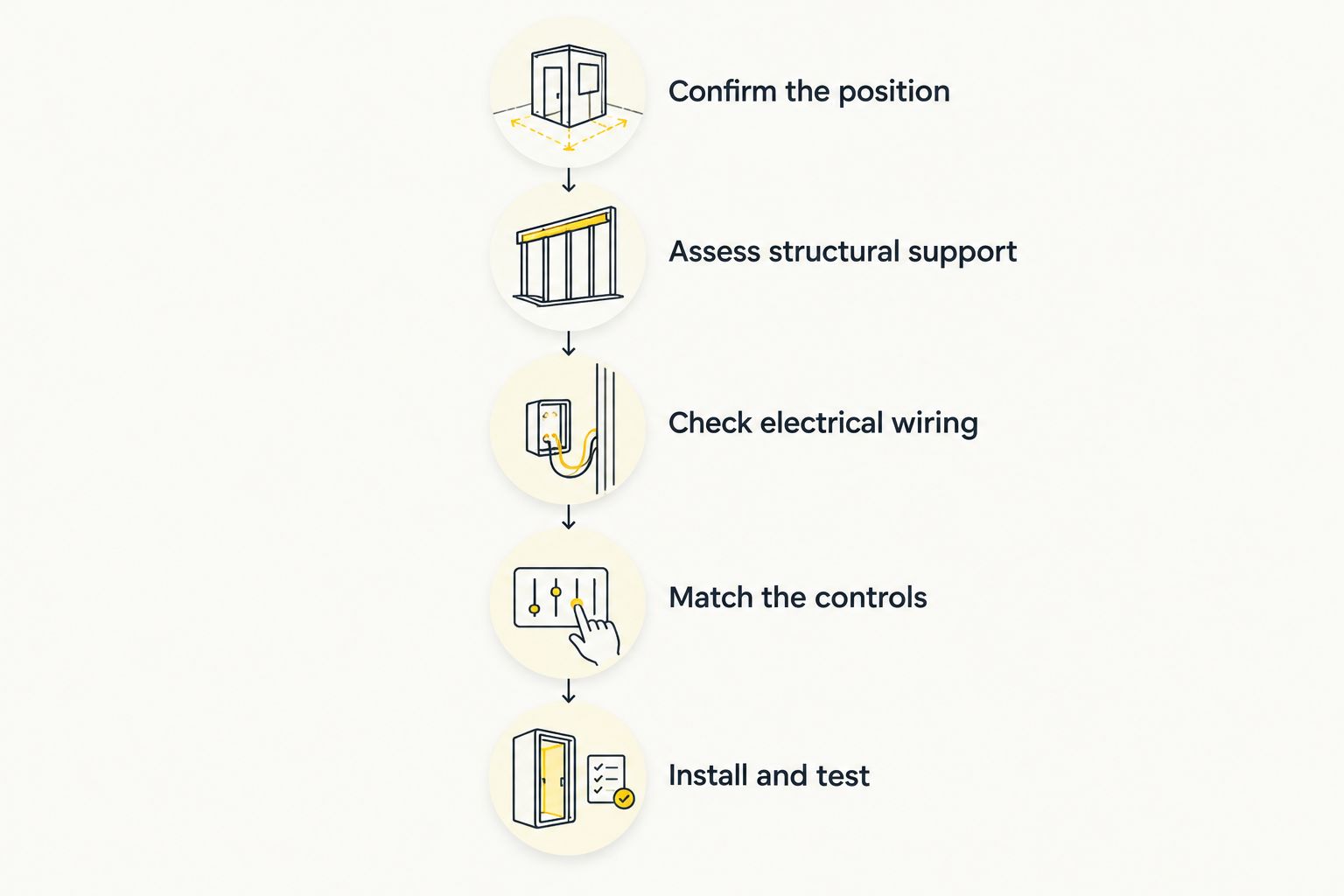
- Confirm the position. The electrician checks whether the location suits the room and provides appropriate clearance from walls, doors, cupboards and other obstructions.
- Assess structural support. The mounting needs suitable structural support. Plasterboard alone is not a substitute for that support.
- Check electrical wiring. The electrician assesses the existing supply, wiring condition and proposed connection arrangement before deciding what can remain.
- Match the controls. The fan, controller and any light need to work together. A remote-controlled fan and a wall-controlled fan do not necessarily have the same wiring requirements.
- Install and test. The completed installation needs electrical testing and checks of the fan’s operation, including its controls and any light.
You can help with planning by sending room photos and the fan’s model information. Leave removal of the fitting, access to electrical connections and testing to the electrician; photos do not replace an on-site assessment.
Fan with a light: best for retaining overhead lighting
A fan with a light is the practical starting point when the existing fitting provides the room’s main overhead lighting. It combines airflow and lighting at the same ceiling position, subject to the installation checks above.
The trade-off is that one position must work for both jobs. A location that suits airflow does not automatically provide the lighting coverage you want, and the light’s operation depends on the model and control arrangement.
Choose a fan with a light when you want to retain overhead lighting without planning a separate fitting. Check how the light is controlled and whether its light source is replaceable before you decide.
Fan without a light: best for rooms with separate lighting
A fan without a light suits a room where other fittings already provide the lighting you need. It lets you assess the fan position for airflow without asking that same position to serve as the main light source.
The limitation is straightforward: removing the old fitting removes its light. If the room needs additional lighting afterwards, that becomes part of the electrical scope rather than an incidental detail.
| Option | Best for | Practical advantage | Limitation to check |
|---|---|---|---|
| Fan with a light | Rooms relying on the existing overhead light | Retains lighting at the fan position | Light coverage and control need to suit the room |
| Fan without a light | Rooms with adequate separate lighting | Keeps the fan and lighting functions separate | Additional lighting work is needed if the room becomes too dark |
For either option, tell the electrician how you use the room. A bedroom needs a different lighting discussion from a living area where you read, work and watch television.
How much clearance does a ceiling fan need?
A commonly specified minimum blade height is 2.1 metres above the floor; the selected fan’s installation instructions govern its required clearances. Do not measure only to the ceiling or the bottom of the light. The blade position is the relevant point for blade-height checks.
A low ceiling leaves less room for the fan’s mounting arrangement. A sloping ceiling introduces another question: whether the model and mounting hardware are suitable for the slope. Neither issue is resolved simply because a light already hangs there.
Check nearby obstacles as well as floor clearance. Tall cupboards, opening doors and sloping sections of ceiling can affect the position. Ask the electrician to check the proposed fan’s blade sweep—the circle its blades occupy—against the actual room layout.
For a 2026 purchase, use the instructions for the exact model you are considering, not dimensions from a similar-looking fan. A smaller-looking housing does not establish the installed blade height.
Why the installation scope varies
The work depends on what is already there and what you want to change. These factors explain why two light-to-fan replacements need different quotes:
- Structural support: suitable support must exist or be provided at the chosen position. The visible light fitting does not reveal the full mounting arrangement above it.
- Wiring condition: the existing wiring needs assessment. Damaged or unsuitable wiring changes the work required before the fan can be connected.
- Control arrangement: a wall controller, remote receiver and separate light switching have different installation requirements. Compatibility matters more than appearance.
- Ceiling access: access to the mounting location affects how the electrician can inspect, support and wire the fan. A ceiling cavity is not always readily accessible.
- Lighting and location changes: moving the fan away from the old light point or adding separate lighting expands the scope. Ceiling patching and painting also need clear responsibility.
When comparing quotes in 2026, keep the proposed fan, location and control arrangement consistent. Otherwise, the quotes describe different jobs rather than different ways of completing the same job.
What should your ceiling fan installation quote include?
Ask for a written scope that separates the fan itself from the installation work. If you are supplying the fan, provide the exact model information before the electrician confirms the installation requirements.
A useful quote identifies:
- Removal of the existing light fitting and the agreed handling of that fitting.
- Whether fan supply is included or you are supplying it.
- The proposed mounting location and any structural support work.
- Electrical wiring alterations and the intended control arrangement.
- Installation and connection of any included light.
- Electrical testing and the documentation applicable to the work.
- Any exclusions, including ceiling repairs or painting.
Ask what happens if inspection reveals additional work. A clear process for discussing and approving changes is more useful than assuming every condition can be established from a photograph.
Tenmen Electrical provides electrical installation and repair services across the Sunshine Coast. For a Caloundra home, describe the existing light point and ask for a quote that addresses support, wiring, lighting and controls—not just fitting the fan.
Can the existing light switch control the ceiling fan?
The existing switch position can sometimes remain part of the installation, but the switch and wiring must suit the selected fan. Do not assume that an existing light dimmer can control fan speed; use the fan manufacturer’s specified compatible controls.
Tell the electrician whether you want separate control of the fan and light. Resolve that before purchase rather than discovering after installation that the controls do not work the way you expected.
Does replacing the light with a fan mean ceiling repairs?
Ceiling repairs depend on the old fitting, the new fan canopy and any access or relocation work. The canopy is the cover at the ceiling, and it does not necessarily conceal every mark or opening left by the previous fitting.
Ask who is responsible for patching and painting before work begins. This is especially useful when moving the fan away from the existing light point, because the former position needs an agreed finish.
Can I replace a ceiling light with a fan myself?
No—Queensland requires a licensed electrician for this electrical installation work. Replacing a fixed light fitting with a ceiling fan involves electrical connections as well as mechanical mounting, even when a remote controls the fan.
You can choose the appearance, explain your lighting needs and provide room measurements. Leave electrical disconnection, wiring, mounting assessment and testing to the qualified installer.
FAQ
Can a ceiling fan use the wiring from my existing light?
Existing light wiring can be reused only if the electrician confirms it suits the fan, its controls and the required installation. The presence of a working light does not establish that the wiring arrangement is suitable.
How high should ceiling fan blades be above the floor?
A commonly specified minimum blade height is 2.1 metres above the floor, with the selected fan’s installation instructions setting its required clearances. Have the electrician check the installed blade position and nearby obstructions.
Do I need a fan with a light if I remove my ceiling light?
You need a fan with a light or adequate separate lighting if you want to retain the room’s lighting function. Decide this before installation so any additional lighting work is included in the scope.
Will a remote-controlled ceiling fan avoid all wiring changes?
A remote-controlled fan does not guarantee that wiring changes are unnecessary. The electrician must assess the supply, receiver arrangement and the manufacturer’s installation requirements.
How much does replacing a light with a ceiling fan cost?
The installation needs a quote based on the fan, structural support, wiring, access and controls. Ask whether removal of the old fitting, electrical testing and any ceiling repairs are included.
Can I put a ceiling fan on an existing light dimmer?
Do not use an existing light dimmer as a fan speed controller unless the fan manufacturer specifically confirms compatibility. Ask the electrician to install the controls specified for the selected fan.
Can Tenmen Electrical help with a ceiling fan installation in Caloundra?
Tenmen Electrical provides electrical installation and repair services for Sunshine Coast homes, including the Caloundra area. Request a quote with photos of the existing light, the room layout and the proposed fan’s model information.
One last thing
Check the ceiling mark before you choose the fan canopy. A new fan can meet the installation requirements and still leave the old fitting’s outline visible. Include a close-up photo of the existing fitting when you request your 2026 quote, and ask whether decorating work will remain afterwards.
For help assessing the replacement, contact Tenmen Electrical and explain whether you want to keep a light at the same point. That small decision belongs at the start of the quote, not at the end of the installation.